A 37-Acre Neighborhood Fayetteville Has Protected Since 1980
The Washington-Willow Historic District sits among Fayetteville's oldest and most architecturally significant residential blocks — a 37-acre neighborhood listed on the National Register of Historic Places in 1980, with its boundaries expanded in 1995. More than 100 homes in the district carry real historic or architectural significance, spanning Victorian, Italianate, Neoclassical and Craftsman-bungalow styles built across several decades of the city's early growth. It's one of the clearest physical records left of what residential Fayetteville looked like before the University of Arkansas and the modern city grew up around it.
The Headquarters House and the District's Civil War Roots
The district's most historically significant structure is the 1853 Headquarters House — known during the Civil War as the Tebbetts House, where Union forces held their position during the April 18, 1863 "Action at Fayetteville" against a Confederate attempt under Gen. William L. Cabell to retake the city. That single structure anchors the neighborhood's identity: a home built years before the war that ended up at the center of one of the defining moments in Fayetteville's Civil War history, still standing in the same district homeowners renovate around today.
What Design Standards Mean for a Renovation Project
Because the district carries real historic status, the city maintains a dedicated Washington-Willow District Design Standards page governing what renovation and exterior work is expected to respect in the neighborhood. If you're planning work on a home here — anything from a roof replacement to an addition — it's worth checking the city's current design-standards guidance early, before demolition starts, rather than after. That's a planning step separate from the debris side of the job, but it shapes the timeline: design review can add time up front that a non-historic renovation wouldn't need to budget for.
The Kind of Debris an Older Home Like This Produces
Homes built in the decades the district represents typically come with plaster instead of drywall, older single-pane windows, original hardwood or heart-pine flooring worth pulling carefully rather than demolishing, and layers of prior-decade updates that all have to come out before new work goes in. Debris volume on a project like this tends to be heavier per square foot and more varied than a comparable newer-home remodel, simply because of what older building materials were made of — plaster and lath, in particular, run heavier than modern drywall for the same wall area.
Getting a Dumpster Onto a Historic-District Street
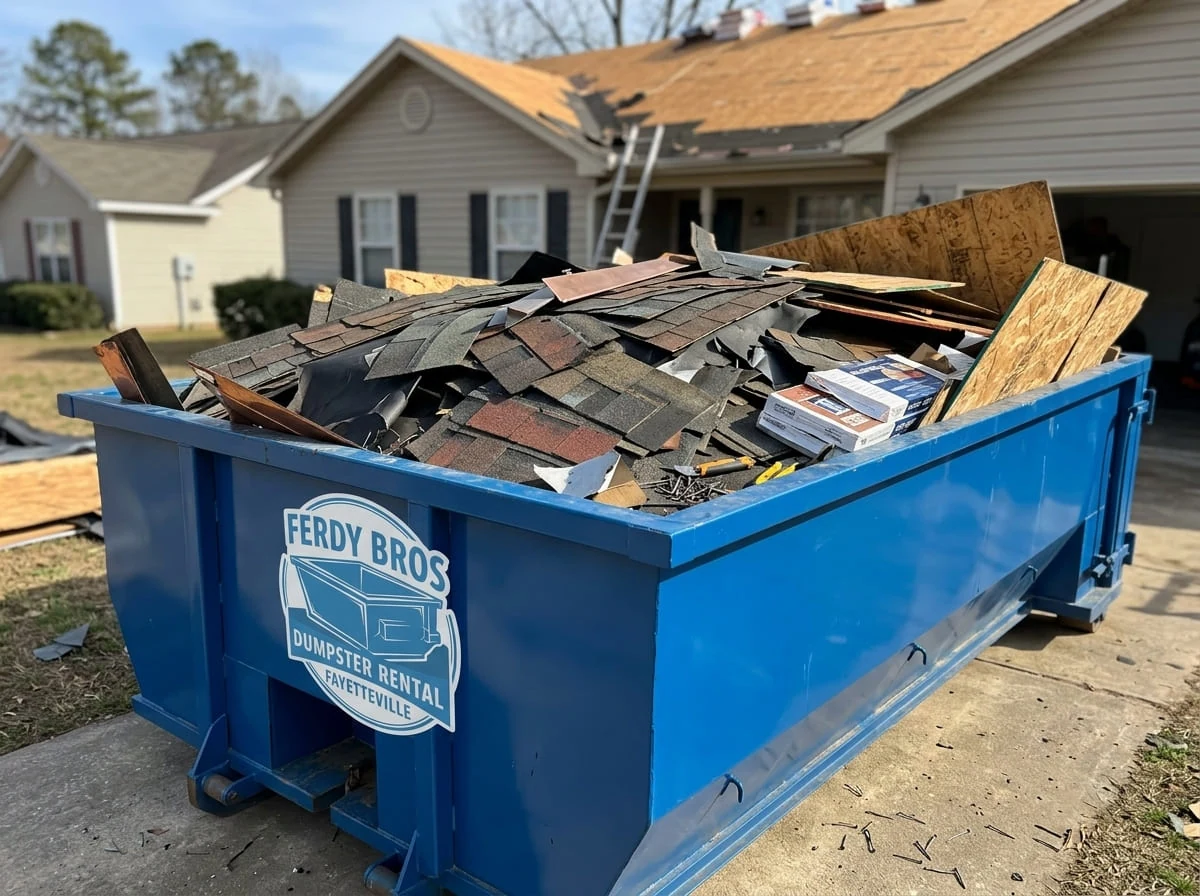
Washington-Willow's streets and lots were laid out generations before a modern roll-off truck was a consideration, which means narrower driveways, mature trees close to the house, and in some cases limited street parking near the property line. We plan placement with all of that in mind — protection under the container's rails on an older driveway, positioning that keeps the load path clear of landscaping and hardscape you're keeping, and a conversation up front about exactly where on the lot the container should sit. None of that is guesswork on our end; it's the same question we ask on every older-Fayetteville-home delivery, because the house and yard you're keeping matter as much as the debris coming out.