Real Storm History, Told Straight
Fayetteville and Washington County sit in the Ozarks/Boston Mountains, at the northeastern edge of a secondary severe-weather corridor sometimes referred to as "Dixie Alley." That geography means tornadoes are a real, if infrequent, part of local weather history — and two specific, well-documented events stand out as the confirmed record for this immediate area. We're sticking to those two here, rather than repeating regional aggregate statistics that blend in damage from neighboring counties.
December 31, 2010: The EF3 That Crossed Into Washington County
As part of the "2010 New Year's Eve tornado outbreak," an EF3 tornado tracked roughly 21.1 miles through the Cincinnati area of far northwest Washington County, crossing the Benton–Washington county line multiple times along its path. It produced peak winds of approximately 142 mph and a width of 300 yards near the unincorporated community of Cincinnati, with additional damage reported northwest of Tontitown. Along its full path — not all of it within Washington County — the tornado caused 4 deaths and 10 injuries. Per aggregated National Weather Service storm data, it remains the deadliest confirmed tornado on record in the immediate Fayetteville/Washington County area.
April 20, 2025: An EF1 in West Fayetteville
More recently, the National Weather Service office in Tulsa confirmed an EF1 tornado that touched down in west Fayetteville on April 20, 2025, with winds of 100 to 110 mph. The tornado's path ran roughly 3.5 miles, beginning near Jess Anderson Road and crossing into the Hughmount Village neighborhood on Fayetteville's northwest edge, near Holt Middle School, around 2:45 p.m., before ending north of Arkansas Highway 112. Four homes sustained major damage, with two deemed uninhabitable. No injuries were reported. It's a useful reminder that tornado risk here isn't confined to distant history — it's a real, current-decade event with a specific, confirmed path through a named Fayetteville neighborhood.
What Cleanup Looks Like After a Tornado Touches Down
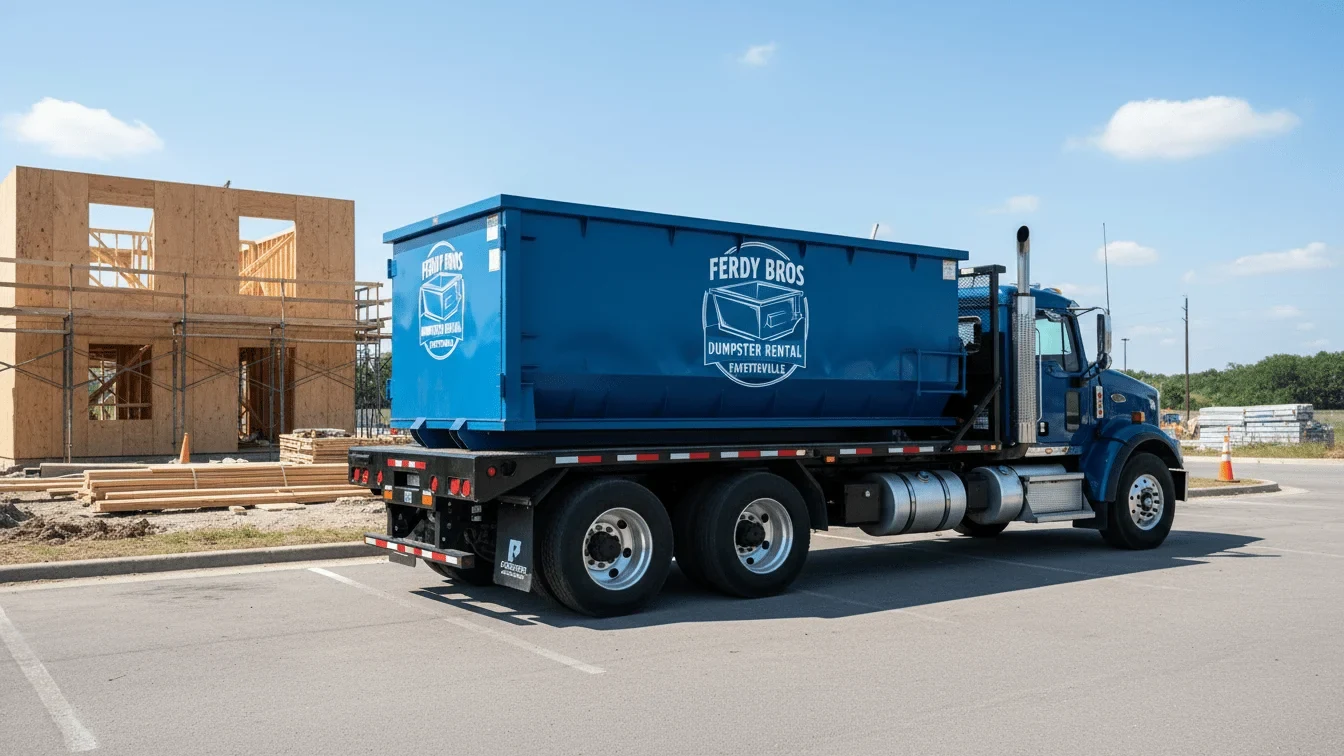
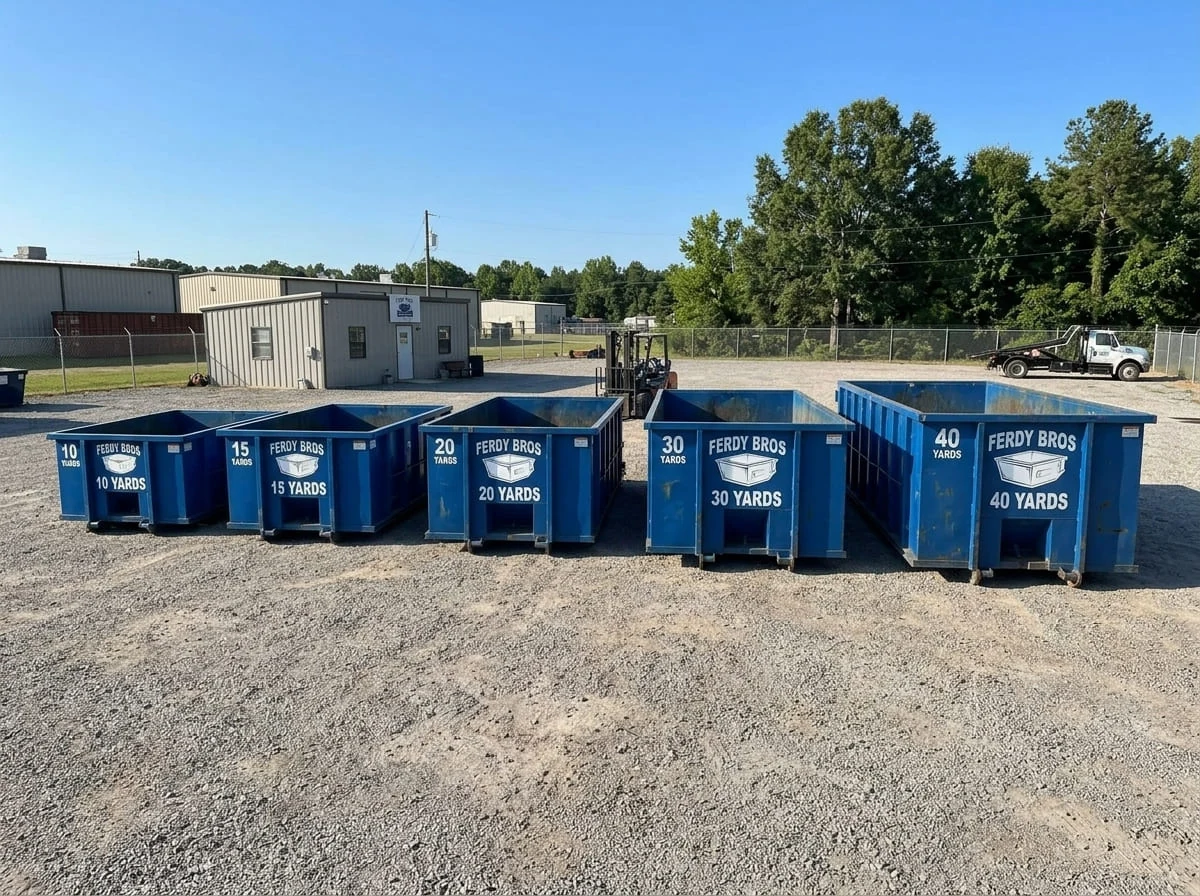
Tornado debris tends to be a genuinely mixed load — structural debris (roofing, siding, framing lumber), downed trees and limbs, and personal belongings displaced from damaged homes, often all in the same immediate area. Unlike a planned renovation, there's no time to sort materials as they come down; the priority in the first days after a storm is safety and access, with sorting and hauling following once the immediate hazard is cleared. That's exactly the kind of job a rented roll-off is built for — a container sized to the damage, delivered to the property, so debris has somewhere to go besides piling up in the yard while repairs get underway.
Building a Household Tornado-Debris Plan
Given that Washington County has real, confirmed tornado history — including one event inside Fayetteville's own city limits in the current decade — it's worth having a basic plan rather than assuming it could never happen here. Know your county's severe-weather alert system, keep a rough sense of what your property's worst-case debris volume would look like, and know who you'd call for a dumpster if repair work generated more debris than a normal trash pickup could handle. We don't perform storm-response work and won't claim otherwise, but getting a properly sized container to a Washington County property quickly after storm damage, for the cleanup that follows, is work we handle regularly.